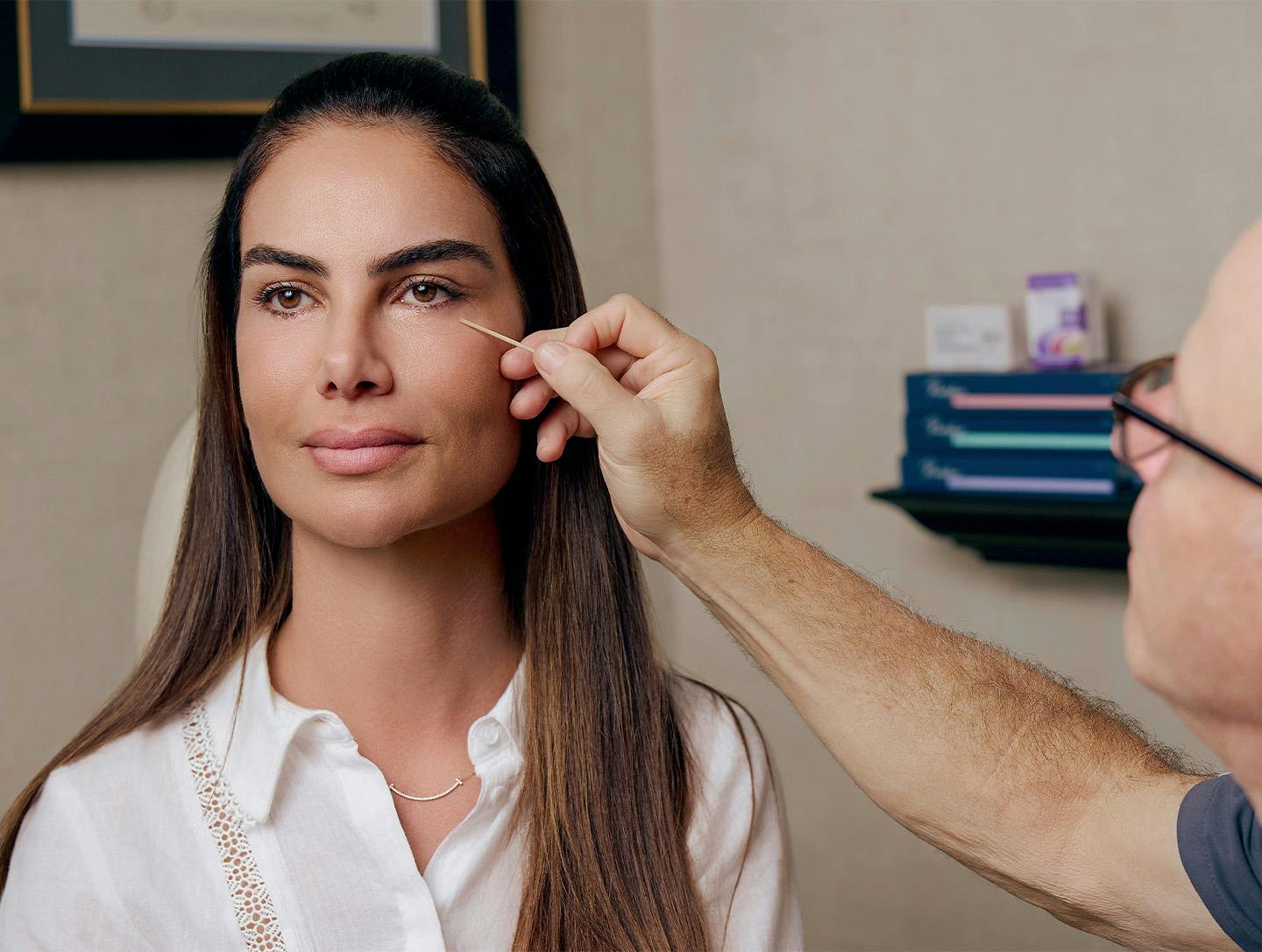
Refresh tired, heavy eyes with precise, natural-looking eyelid rejuvenation.
Blepharoplasty Overview
Restore a Brighter, More Rested Appearance Around the Eyes
The eyes are often the first area to show signs of aging, even when the rest of your face still feels youthful. Sagging lids or under-eye fullness can create a tired or heavy appearance that doesn’t reflect how you feel. At Berman Plastic Surgery & Spa, eyelid surgery in Boca Raton is performed with precision and restraint, helping patients look refreshed without changing their natural expression.
What Is Blepharoplasty (Eyelid Surgery)?
Blepharoplasty (eyelid surgery) is a specialized procedure that restores a bright, open appearance by reshaping the delicate tissues around the eyes. Over time, loss of skin elasticity and shifting fat pads can cause upper lids to hood or lower lids to look puffy and shadowed.
Dr. Berman performs blepharoplasty by making discreet incisions hidden within the natural eyelid creases to subtly adjust skin, muscle, and fat, delivering a naturally refreshed look without altering your fundamental eye shape.
How Eyelid Surgery Improves the Eye Area
Blepharoplasty is a surgical procedure designed to remove excess skin and fat from the upper and/or lower eyelids, restoring a smoother, more youthful contour. It can be performed for cosmetic improvement or, in some cases, to address functional concerns related to vision. Eyelid surgery can help address concerns such as:
Drooping upper eyelids
Puffiness or under-eye bags
Excess skin around the eyes
A tired or aged appearance
Reduced definition of the upper eyelid crease
Shadowing or heaviness in the lower eyelids
Why Patients Choose This Procedure
Blepharoplasty in Boca Raton is one of the most effective ways to achieve a refreshed, natural look without altering overall facial identity.
Blepharoplasty is often chosen by patients who notice sagging skin, puffiness, or heaviness around the eyes that makes them look older or more tired than they feel. These changes can occur gradually with aging or be present due to genetics.
Most candidates are in good overall health and want a natural improvement rather than a dramatic change. If you are looking for non-surgical eye rejuvenation, we may also discuss options in our Medical Spa, such as targeted dermal fillers or skin-tightening laser treatments. A consultation allows Dr. Berman to evaluate your anatomy and determine whether eyelid surgery in Boca Raton is the most appropriate approach for your goals.
What to Expect During Eyelid Surgery
Personalized Evaluation and Surgical Planning
Your procedure begins with a detailed assessment of your eyelid anatomy, including skin quality, muscle strength, and fat distribution. This allows for a customized surgical plan tailored to your needs.
Precise Incision Placement
Incisions are carefully placed within the natural creases of the eyelids or just below the lash line. This allows for effective correction while minimizing visible scarring.
Removal and Repositioning of Tissue
Excess skin and fat are removed or repositioned to create a smoother, more youthful contour. Care is taken to preserve natural eye shape and function.
Refinement and Closure
Incisions are closed with precision to support optimal healing. The goal is to restore a refreshed appearance while maintaining the unique character of your eyes.
Eyelid Surgery Pricing in Boca Raton: What does a Blepharoplasty cost?
Transparent pricing is essential to planning your aesthetic investment. At Berman Plastic Surgery & Spa, surgical estimates include your comprehensive pre-operative and post-operative care:
Upper Eyelid Surgery (Upper Blepharoplasty): Starting at $4,000
Lower Eyelid Surgery (Lower Blepharoplasty): Starting at $4,500
Quad Blepharoplasty (Upper & Lower 4-Lid Lift): Starting at $8,500
Note: Final costs depend on your specific anatomical needs and customized treatment plan. Surgical facility and anesthesia fees are determined individually based on the scope of your procedure. For a comprehensive list of surgical fees and non-surgical treatments, view our Full Plastic Surgery Pricing Guide or explore our flexible Procedure Financing Options.
Eyelid Surgery Options with Dr. Berman in Boca Raton
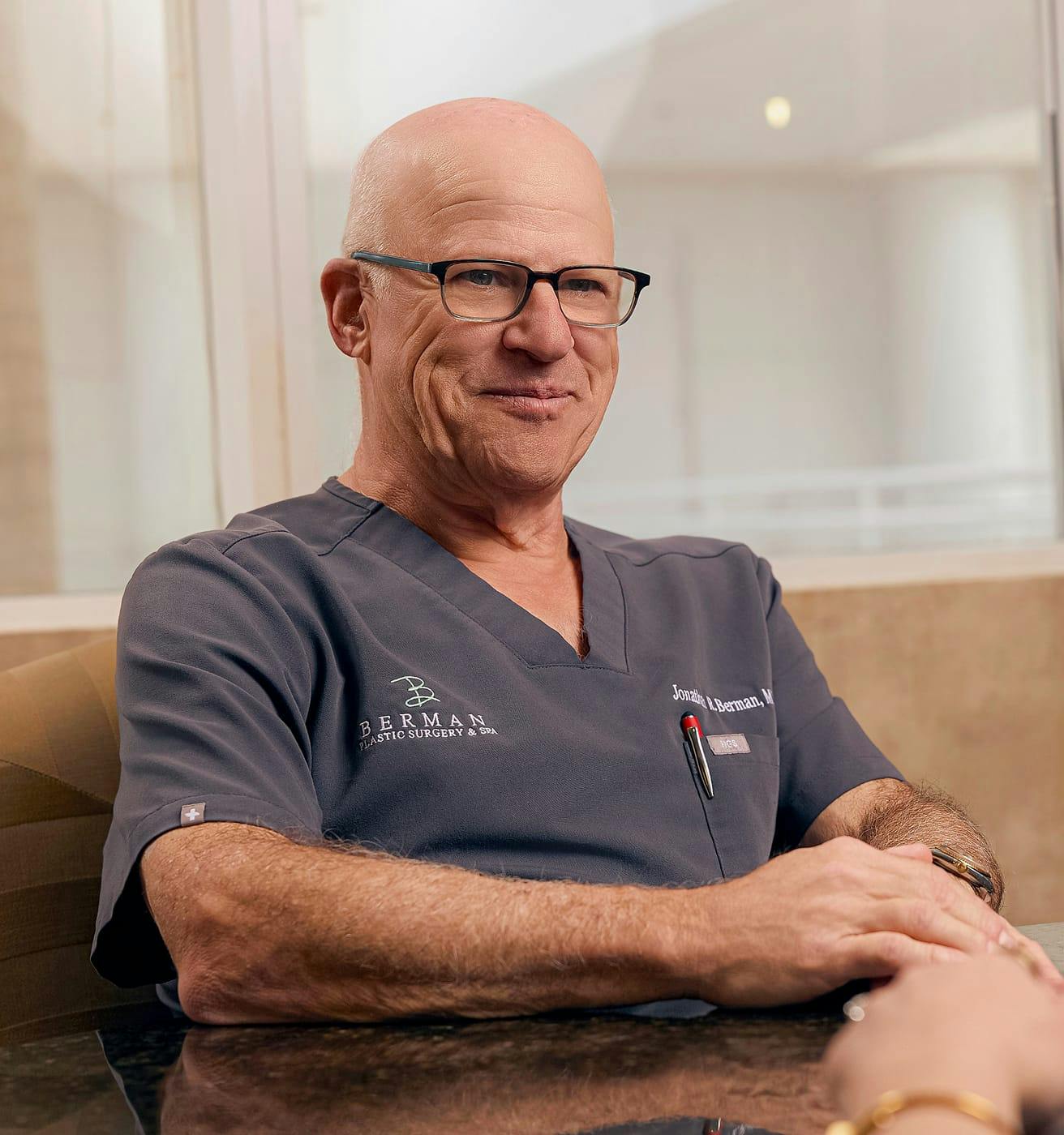
No two sets of eyes age at exactly the same rate. As a double board-certified plastic surgeon in Boca Raton, Dr. Jonathan Berman tailors every blepharoplasty procedure to match your unique orbital anatomy, skin elasticity, and aesthetic goals:
Upper Blepharoplasty in Boca Raton:
Tailored for heavy or hooded upper eyelids. Dr. Berman creates subtle, concealed incisions along the lid’s natural crease to remove weight-bearing skin and sculpt underlying fat pads. This lifts the upper lid frame, opens up your gaze, and clears away sagging tissue that may impair your field of vision.
Lower Blepharoplasty:
Focused on smoothing under-eye hollows, fine lines, and persistent bags. Rather than aggressively removing tissue—which can create a hollowed appearance, Dr. Berman expertly repositions and sculpts herniated fat pads to restore a seamless transition from the lower eyelid down to the cheek.
Quad Blepharoplasty (4-Lid Eyelid Surgery):
When aging impacts both the upper and lower eyelids, Dr. Berman performs quad blepharoplasty to rejuvenate all four eyelids in a single, coordinated procedure. Addressing the top and bottom lids together provides complete periorbital balance, a unified aesthetic result, and the convenience of a single recovery period.
Your Detailed Blepharoplasty Recovery Timeline
Recovery after blepharoplasty in Boca Raton is generally smooth and manageable. Here is what you can expect step-by-step:
Days 1–3: Mild swelling, bruising, and minor tightness or dryness are common. Applying cold compresses and keeping your head elevated will significantly reduce swelling.
Week 1: Most patients feel comfortable returning to desk work and light social activities within 7 to 10 days. Suture removal typically occurs around day 5 to 7.
Week 2: You can resume wearing contact lenses and light makeup to cover any lingering discoloration.
Weeks 3–4: Normal exercise routines and strenuous activities can typically be resumed under Dr. Berman's guidance.
Dr. Berman provides detailed post-operative care instructions and personally monitors your eyelid surgery healing process every step of the way.
Enhancing Your Eyelid Surgery Results with Complimentary Blepharoplasty procedures
To achieve harmonious, full-face rejuvenation, Boca Raton patients frequently combine eyelid surgery with other surgical and non-surgical procedures:
Facelift & Neck Lift Surgery: Corrects lower face jowling and neck laxity alongside eye rejuvenation.
Brow & Forehead Lift: Elevates heavy brows that contribute to upper eyelid crowding.
Laser Skin Resurfacing: Smooths fine lines ("crow's feet") around the outer eye corners that eyelid surgery alone cannot remove.
Boca Raton Botox Injections: While blepharoplasty removes sagging skin and fat, Dr. Berman uses Botox to relax active muscle movements, smoothing dynamic crow's feet and frown lines for a completely refreshed look.
Why Choose Berman Plastic Surgery & Spa?
The eye area requires exceptional precision and judgment. Dr. Jonathan Berman brings over 35 years of experience and dual board certification, offering advanced expertise in facial procedures where small details make a significant difference.
At Berman Plastic Surgery & Spa, every procedure is performed by Dr. Berman in a boutique, single-surgeon setting. This ensures consistency, attention to detail, and a personalized approach. His goal is always to restore a refreshed appearance while preserving the natural character of your eyes.
As swelling subsides, patients begin to notice a brighter, more alert appearance with smoother eyelid contours.
Results are designed to look natural, allowing your eyes to reflect how you feel rather than appearing overdone.
Testimonials
Receiving services from Maria H was an exceptional experience. She is thorough and a joy to be around. What more can I ask for? Loving my results so far, will be back soon & I ...
Receiving services from Maria H was an exceptional experience. She is thorough and a joy to be around. What more can I ask for? Loving my results so far, will be back soon & I can’t wait.
M.B.
Maria Hernandez performed a full-face Erbium laser treatment for me, and I had an excellent experience at Berman Plastic Surgery & Spa. The office was clean, professional, and very...
Maria Hernandez performed a full-face Erbium laser treatment for me, and I had an excellent experience at Berman Plastic Surgery & Spa. The office was clean, professional, and very welcoming, which made the entire visit even more comfortable. Maria was incredibly kind, explained every step of the process thoroughly, and made sure I felt at ease the whole time. Her pricing was very fair, and I was able to purchase a promotional package, which I really appreciated. The results made everything well worth it. I highly recommend both Maria and Berman Plastic Surgery & Spa, and I will definitely be returning for future treatments. You wont regret going to Maria Hernandez she is the best.
E.V.
I can’t say enough great things about Dr. Jonathan Berman. From start to finish, he was incredibly thorough, taking the time to explain every detail and making sure I felt co...
I can’t say enough great things about Dr. Jonathan Berman. From start to finish, he was incredibly thorough, taking the time to explain every detail and making sure I felt comfortable and confident in my decisions. The level of care he provides is truly top-notch — you can tell he genuinely cares about his patients and their results. I’ve recommended many friends to see him, and every single one has had a wonderful experience and has been extremely happy with their outcomes. If you’re looking for a skilled, attentive, and trustworthy plastic surgeon, I highly recommend Dr. Berman!
T.P.
Dr. Berman and staff provided an excellent experience for my plastic surgery. Dr. Berman was very thorough in the explanation of the surgery with realistic expectations. The staff...
Dr. Berman and staff provided an excellent experience for my plastic surgery. Dr. Berman was very thorough in the explanation of the surgery with realistic expectations. The staff was always there for me with guidance and knowledge. I am very pleased with the results of my surgery and wish I had proceeded sooner. Without hesitation, I would recommend Dr. Berman and his practice.
S.D.
I am 21 years old and I did my lower blepharoplasty with Dr. Berman and I was amazed at how great the service was here. The staff here are incredible! They all remembered my name ...
I am 21 years old and I did my lower blepharoplasty with Dr. Berman and I was amazed at how great the service was here. The staff here are incredible! They all remembered my name and were so friendly and they were always asking how I was healing and really did care about my surgery journey and healing process. Dr. Berman was so friendly and professional and I could really tell that he cared a lot about all of his cases and wanted me to get the best results. He was clear and concise and the surgery went great! He talked me through the procedure and healing process before in detail and answered all my questions. As a black person, there are a lot of different ways we heal and that our scarring can discolor and Dr. Berman made sure I understood that and really took care of me to make sure that I was healing appropriately. I would 100% recommend him and I am so happy with my choice.
C.A.
Had an amazing experience with Dr. Berman!! Came in for a fractured nose! Was able to be seen right away! The office staff was great with communication! Dr Berman was able to corre...
Had an amazing experience with Dr. Berman!! Came in for a fractured nose! Was able to be seen right away! The office staff was great with communication! Dr Berman was able to correct my nose! Beautiful results! Back to normal, highly recommend!
Melissa Gayer
Really friendly and helpful staff. Great results. No complaints
Chase Wells
Amazing doctor!! So knowledgeable and friendly. Made me and my girlfriend feel so at ease for our treatments. Highly recommend and trust him!
C S
I had my stitches removed today 5 days after an upper eyelid bleph. I just want to say what a pleasure it has been working with Dr Berman and his staff. You are more than just a pa...
I had my stitches removed today 5 days after an upper eyelid bleph. I just want to say what a pleasure it has been working with Dr Berman and his staff. You are more than just a patient at this facility as Dr Berman actually calls you by name and the staff is so kind and thoughtful throughout the entire process. I had local anesthesia as it was a short procedure. I was given meds to keep me calm and the only pain was the initial needles to inject the numbing. Everything went so smooth and the follow up was everything you would want it to be. I followed their advice to ice ice ice and have minimal bruising. Today the stitch removal was quick and barely uncomfortable. I can’t wait for the full effects to come into focus. Highly recommended!!!
Nancy
I have been very happy with my experience receiving facials with Maria at the office. She is extremely thorough, detailed, and very educational throughout the entire process. I alw...
I have been very happy with my experience receiving facials with Maria at the office. She is extremely thorough, detailed, and very educational throughout the entire process. I always feel well taken care of and informed about my skin care needs. I would definitely recommend Berman Plastic Surgery & Spa for anyone looking for professional skin care and laser treatments. Their level of care and expertise is outstanding.
Andrea Gaitan
Dr. Berman is one of the most professional Physicians I’ve ever met. Right at the start you realize you’re working with a practice that cares and listens. The staff is very profes...
Dr. Berman is one of the most professional Physicians I’ve ever met. Right at the start you realize you’re working with a practice that cares and listens. The staff is very professional and knowledgeable. Dr. Berman spends the time to listen and asks questions before suggesting treatment or procedures. One of kind medical professional. Highly recommended practice .
Tamer Zeitoun
From my first visit to my "discharge" it was a pleasure working with everyone at the Berman Surgery and SpaFrom the moment I made my initial appointment I was treated with care and...
From my first visit to my "discharge" it was a pleasure working with everyone at the Berman Surgery and Spa From the moment I made my initial appointment I was treated with care and respect.
Each person knows their job and does it very well I'm very impressed with the practice everyone is courteous knowledgeable and caring
Dr.Berman explained everything..treating me as an intelligent adult I was impressed with his computer skills and he had alternative plans to cover any eventuality.
One of the things I liked the best is every visit is on time there's no waiting they are ready for your procedure They treat you as though your time is just as important as theirs even more so
If you want/need an extremelyskilled,experienced physician with a truly wonderful support staff this is the place for you
Laurie Wolin
Amazing!!!
Stephanie Petchers
Wonderful!Great customer service and impressive office and staff!
Susan Hugel
Thank you so much Dr Berman for your kindness humility and for you knowledge
Gina Marie
Staff, receptionist and surgeon all outstanding!
Susan Harris
First Class. Dr. Berman and staff are wonderful !!!
Stuart Schwartz
Dr. Berman and his staff are amazing and took great care of me
Kendra Busby
I enjoyed my dermaplaning today, friendly stuff and my skin feels refreshed, would come back again
CBD Girl
Kind and excellent plastic surgeon! Did a wonderful job on the rhinoplasty on my daughter!
Cher L
Very professional staff and friendly atmosphere. I enjoyed the communication and information provided. Any question I had was answered quickly and I never had to wait. The work per...
Very professional staff and friendly atmosphere. I enjoyed the communication and information provided. Any question I had was answered quickly and I never had to wait. The work performed was excellent.
Kaitlin Townsend
I love the results of my nose. Every person working in this office is so sweet and makes you feel welcomed
kelly Conelly
What a friendly and professional place! I have already made an appointment for my next treatment. Best place for a HydraFacial .. knowledgeable staff!
ClaudiaM
I have known Dr. Berman a long time and he is an excellent surgeon. His attention to detail is second to none
Susan Rice
The results I had from Dr. Berman and his friendly staff exceeded my expectations! Very pleased and delighted
Mindy Lyons
Every single person in the office was above and beyond kind and professional. The procedure went perfectly. Highly recommend this doctor!
Kirsten Charlson
Dr. Berman is a great plastic surgeon who pays attention to every detail to give you wonderful results 😊
E OW
Amazing staff and amazing Dr. Extremely knowledgeable and informative. Great bed side manner. Takes his time to explain everything. Strongly recommend
Martin Furman
I had a breast augmentation a little over a year ago with Dr Berman and couldn't be happier with my results. After 3 kids, he worked his magic and made me look like a teenager agai...
I had a breast augmentation a little over a year ago with Dr Berman and couldn't be happier with my results. After 3 kids, he worked his magic and made me look like a teenager again.
Tara Waltz
Doctor and staff are super professional, courteous, and kind. I couldn't be happier with the results of my procedures, the support I received, and the office overall. 10 out of 10
Michelle Cavallo
Dr. Berman is 'The Aesthetic Surgeon's surgeon. He, and his staff are simply the best. :)
Tiara
Gissele is an amazing aesthetician. I am beyond pleased with my results. I have experienced hydrafacials elsewhere and nothing compares to the quality she brings. She has an eye fo...
Gissele is an amazing aesthetician. I am beyond pleased with my results. I have experienced hydrafacials elsewhere and nothing compares to the quality she brings. She has an eye for skin care, knew exactly what I needed, explained the process thoroughly and worked wonders on my skin. She is so knowledgeable and such an asset to this facility. I drive 2 hrs sometimes from Miami to see her. And it's so worth it.
Fatima Othman
I came into Dr. Berman’s office because I have hyperpigmentation on my face, back, thighs, and other areas. Let me just say that Idania (the esthetician) is a wonderful lady. After...
I came into Dr. Berman’s office because I have hyperpigmentation on my face, back, thighs, and other areas. Let me just say that Idania (the esthetician) is a wonderful lady. After having my first chemical peel I could tell that she really cared for me. She will make sure that the chemical peel doesn’t bother you and explains the entire process of the peel. Also, she really cares about the results and will do her best to make sure you get the results you want. I’m very pleased to have found a place that doesn’t use you for your money. I’ll for sure keep coming by once I’m done with my 3 peels :)
Vee
I came in looking and feeling tired. Left looking and feeling refreshed and youthful. I would recommend Dr Berman and staff to everyone. Love when I tell people how old I am and th...
I came in looking and feeling tired. Left looking and feeling refreshed and youthful. I would recommend Dr Berman and staff to everyone. Love when I tell people how old I am and they can't believe it. What am ego boost!!!!!
Micheal Berstein
Amazing staff and Dr Berman is great, front desk staff super helpful and such a smooth and easy process, surgery thru recovery and follow up, would refer all to this office!
Alison Santiago
Dr. Berman and his office are extremely professional and will absolutely take the best care of you!! Not only did they give me the results I wanted but they went beyond what I expe...
Dr. Berman and his office are extremely professional and will absolutely take the best care of you!! Not only did they give me the results I wanted but they went beyond what I expected as well!! I will definately be back!
Valerie Speer
I am extremely happy with my son’s results. He is an amazing doctor and the staff is great! Couldn't have asked for a better experience
Jeanette Mederos
Loved my experience and results. Dr.Berman is an excellent doctor who delivers results.Strongly recommend!!!!Thank you doc 🙏❤️👍
Anna
Surgery went great for my deviated septum repair. Awesome personable staff. Staff was always pleasant and makes you feel at ease. I would highly recommend Dr. Berman
Stella Tamborello (Polka Dot Notary Service)
Incredible team! Dr Berman is an expert at his craft. Highly recommend!!
Rachel Bowen
Very professional and competent staff. Entire procedure explained in detail in advance. Results exceeded expectations. No discomfort during procedure or immediately afterward. Dr. ...
Very professional and competent staff. Entire procedure explained in detail in advance. Results exceeded expectations. No discomfort during procedure or immediately afterward. Dr. Berman's experience, skill and precautions to manage any health risks provided me with with confidence to have the procedure.
John Falikowski
Would give 10 stars if I could. Dr Berman really cares and works hard to do a great job. Staff is amazing. Nicole, Casey and Lauren are very personable, friendly and professional
Edward McLean
I was referred to Dr. Berman's office by a friend in Arkansas for facial dermatology. Diane was fabulous! From the greeting, to the information to the treatment, everything was ver...
I was referred to Dr. Berman's office by a friend in Arkansas for facial dermatology. Diane was fabulous! From the greeting, to the information to the treatment, everything was very professional. Highly recommend
Barbara Crane
I just had my Botox with Dr. Berman - great experience! He took time to answer all my questions and did not make me feel rushed. He even took time to explain other procedures not r...
I just had my Botox with Dr. Berman - great experience! He took time to answer all my questions and did not make me feel rushed. He even took time to explain other procedures not related to Botox. Kris, his nurse and patient coordinator is very caring and knowlegeable.
Renee Kerr
The experience from beginning to end was fantastic. The staff all the way to seeing the Dr. Was great. Everyone was very sweet and helpful. I was nervous going there for my under ...
The experience from beginning to end was fantastic. The staff all the way to seeing the Dr. Was great. Everyone was very sweet and helpful. I was nervous going there for my under eye fillers but with the assurance of staff and that numbing cream i didn't feel a thing. I would definitely recommend Dr.Berman!!! -Dayna M.
This is CARDAY
Top-quality human being, skilled, and wonderful communicator!I had been suffering for over a year with loud ringing in my ears and had gone twice within the past year to ENTs in Bo...
Top-quality human being, skilled, and wonderful communicator!
I had been suffering for over a year with loud ringing in my ears and had gone twice within the past year to ENTs in Boca who each gave me a nasal endoscopy and also told me my ears were clear and there was nothing they could do for me.
I was drawn to make an appointment with Dr. B when I saw that he was a Yale graduate and double boarded -- ent and plastic surgery.
After being given the complimentary ear cleaning, which lasted 10 minutes, by his delightful staff, and as a result the screeching and ringing sounds that would wake me up in the middle of the night and bother me daily subsided and went "completely" away, and months later have not returned.
Fifteen years ago by another doctor I had a rhinoplasty and chin implant. The rhinoplasty was a disaster. For the past few years my lower teeth were slowly eroding. After reading about complications with side effects that can happen with chin implants, I was concerned that it was causing the problem.
Dr. B ordered a panorex of my face. He placed the CD of the results in his computer and explained in detail and in layman's terms exactly what was going on.
I would recommend this doctor. His staff is very professional, knowledgeable and top notch. If you want to get to the bottom of an issue, you will get the answers you are looking for from this office.
s j
Wonderful staff. Really the nicest and most attentive staff I’ve seen at any doctors office. Dr Berman himself is very thorough, friendly and does amazing work. Absolutely would hi...
Wonderful staff. Really the nicest and most attentive staff I’ve seen at any doctors office. Dr Berman himself is very thorough, friendly and does amazing work. Absolutely would highly recommend them.
Andrew V
I had a rhinoplasty with Dr. Berman and satisfied with my results. My scar diminished within months and the results are very natural considering my thick skin. I would recommend Dr...
I had a rhinoplasty with Dr. Berman and satisfied with my results. My scar diminished within months and the results are very natural considering my thick skin. I would recommend Dr. Berman to other patients.
Tatyana
I was Referred to Dr. Berman by a close friend and was really quite pleased by the outcome. My pre-cancerous face spot required a smart, quality bit of surgery. The doctor delive...
I was Referred to Dr. Berman by a close friend and was really quite pleased by the outcome. My pre-cancerous face spot required a smart, quality bit of surgery. The doctor delivered nicely. A+ from beginning to end, including his team (Kris included!). Surgery was in his office operating room. All very good. P.
Patrick Meyer
From start to finish, Dr. Berman and his entire staff, especially Hajar, we're professional, compassionate and eager to communicate every step of the process from pre-op to post-op
Greg Hyden
I had Botox and Lip filler and I'm very happy with my results! All of the staff was super friendly and Dr. Berman made the experience fun, quick and easy. I'll definitely be going ...
I had Botox and Lip filler and I'm very happy with my results! All of the staff was super friendly and Dr. Berman made the experience fun, quick and easy. I'll definitely be going back for touch ups!
Maribel Castillo
My son is an accomplished AAA Tier 1 hockey player. Flew down from Pittsburgh to see Dr. Berman. Stitched him up very nicely. Simply great care. Excellent follow through and patien...
My son is an accomplished AAA Tier 1 hockey player. Flew down from Pittsburgh to see Dr. Berman. Stitched him up very nicely. Simply great care. Excellent follow through and patient care. Very pleased..
Tom F.
I had an earlobe repair with Dr. Berman and his assistant Liz, and I must say it was very much painless. Dr. Berman was great and explained the process very thoroughly , he was gre...
I had an earlobe repair with Dr. Berman and his assistant Liz, and I must say it was very much painless. Dr. Berman was great and explained the process very thoroughly , he was great and I highly recommend him and his staff!
L M
Dr. Berman was excellent and walked me through each step exceptionally and professionally. I appreciate his staff and his expertise as all were the nicest and most courteous medica...
Dr. Berman was excellent and walked me through each step exceptionally and professionally. I appreciate his staff and his expertise as all were the nicest and most courteous medical staff I have experienced in SOFLO.
Highly recco him for anyone seeking real advice and results.
Michael
All my life, I have been extremely self-conscience of my breast size. After meeting with Dr. Berman and Kris, I felt comfortable enough to move forward with the surgery. I can not ...
All my life, I have been extremely self-conscience of my breast size. After meeting with Dr. Berman and Kris, I felt comfortable enough to move forward with the surgery. I can not believe how easy and fast recovery was. I am extremely happy with my results. I referred my sister and she is having her surgery in a few weeks! Thank you Dr Berman for giving me the confidence I needed.
Jessica Irons
I broke my nose 5 years ago and have looked at myself in the mirror everyday hating the way my face looked ever since. Until now. Until Dr. Berman changed my life for the better wi...
I broke my nose 5 years ago and have looked at myself in the mirror everyday hating the way my face looked ever since. Until now. Until Dr. Berman changed my life for the better with his incredible artistry and care. Over the past 3-4 years, I had consults with multiple plastic surgeons in NYC (where I am from) and they all wanted to change my entire face. I am 25 years old - up until these consults, I truly loved everything about my face except my nose.
When I finally made it down to Florida to see Dr. Berman, I knew he was the right doctor to go with for my rhinoplasty. As soon as I walked into his office, I was greeted by the most generous, caring, and patient staff. Courtney and Barbara were there to answer all of my appointment/financial logistics questions. Kris helped me understand all of the paperwork prior to surgery, the pre- and post-op instructions/medications and what to expect from the surgery, both emotionally and physically. She was absolutely incredible, answering all my questions, both the ones I asked and the ones I did not even know to ask. I will speak of Annabella later in my story because I met her post-operatively, but you will absolutely meet her, and when you do, you'll know exactly how outstanding she is.
Then, I met Dr. Berman. The first thing he asked me during my initial consult was what my plastic surgery goals were. MY goals, not the goals that would turn out a good surgical "product" or make me look like a barbie doll. It was all about me - as it should have been. After all, I was the one going under the knife. And boy was I nervous. He calmed my nerves by telling me exactly what he was going to do during the procedure. I am in the medical field so I really appreciated him talking to me as though I was an equal despite me having very little plastic surgery knowledge. After multiple long conversations with him, we decided together to do a rhinoplasty, neck liposuction and a small fat transfer to my lips.
The day of surgery was a whirlwind but Dr. Berman was there to greet me prior to the surgery and followed up with me the next day in his office. He was attentive, gentle, and genuinely cared how I was feeling after the surgery. Post-op day 1, I met Annabella his scrub technician who was also phenomenal. She calmed my nerves when the stitches were coming out, she warned me when things were going to be uncomfortable and patiently discussed any further questions that I had during my first week post-op (which was A LOT).
If I haven't already convinced you that my experience with Dr. Berman was a rewarding one, you should see my nose. It is the cutest, most perfect nose for my face. Not overdone, not fake-looking, and the perfect amount of change that makes me look in the mirror each day and love me. The liposuction of the neck and fat transfer to the lip are just added benefits that make my face look leaner, my eyes look bigger and my lips look plump and kissable.
Dana Hindman
Dr. Berman and team are amazing. Walking in their office made me feel at home. All the staff was always at your side, to offer a helping hand. Kris's bubbly and friendly personalit...
Dr. Berman and team are amazing. Walking in their office made me feel at home. All the staff was always at your side, to offer a helping hand. Kris's bubbly and friendly personality makes your fears disappear. She gave me really great information and always had an answer for any question. I thank them so much and look forward to enhancing my beauty with the team.
Andrea Parker
I have been seeing Dr. Berman for 6 years. I have had several procedures done, and I am always happy with the results. Dr. Berman always spends the time with me that is needed and ...
I have been seeing Dr. Berman for 6 years. I have had several procedures done, and I am always happy with the results. Dr. Berman always spends the time with me that is needed and I never feel rushed. I only hope he never retires... I am one happy camper. Thank you Dr. Berman for all you do.
Susan Annunziata
The whole team at Dr Bermans office is absolutely amazing, especially Lauren! She’s so accommodating to my schedule and very very attentive to all of my needs. She’s the sweetest. ...
The whole team at Dr Bermans office is absolutely amazing, especially Lauren! She’s so accommodating to my schedule and very very attentive to all of my needs. She’s the sweetest. I love the friendly and welcoming environment she has created at the office
nicolette durante
I had the good fortune to be referred to Dr. Berman. My surgery went well. I was told what would happen and it went just as the doctor said it would. Thank you. I followed the inst...
I had the good fortune to be referred to Dr. Berman. My surgery went well. I was told what would happen and it went just as the doctor said it would. Thank you. I followed the instructions exactly and all has gone well. Pre-operative care was great. He made sure that I was healthy enough to under go the procedure. All of this made sure that I would do well. His staff; from the receptionist to the nurses gave me excellent care. I am so grateful to the receptionist who made my appointments and verified them. The two nurses who dressed the surgical site and helped to get through the trauma. I was treated like a queen. The nurses working for the doctor are the ambassadors to the patient. Thank you so much for such good care. You have made this experience much better.
Rosalie Rhodes
Dr Berman and all his staff are the BEST. During the consultation all of my questions were answered and there was no rush to get me out of the office. They took their time to thoro...
Dr Berman and all his staff are the BEST. During the consultation all of my questions were answered and there was no rush to get me out of the office. They took their time to thoroughly explain everything that was going to be happening before, after and during my procedure. Kris is ALWAYS a phone call away if I have any questions no matter what time of day. Dr. Berman, Kris, Anabella and Courtney made my experience having surgery stress free and relaxing.
Lauren Schneider
Dr. Berman did a wonderful job on my Botox. It was my first time to have it done by him and he explained everything very well and I knew exactly what to expect. It was an easy proc...
Dr. Berman did a wonderful job on my Botox. It was my first time to have it done by him and he explained everything very well and I knew exactly what to expect. It was an easy process and the results look great. His office staff was friendly and very knowledgeable during my visit. I highly recommend Dr. Berman
Julie Lieberman
10/10!!The kindest staff ever, truly did everything to make me comfortable during my experiences there!And Dr. Berman does a great job!Very natural looking and so caring during rec...
10/10!! The kindest staff ever, truly did everything to make me comfortable during my experiences there! And Dr. Berman does a great job! Very natural looking and so caring during recovery.
Jassy Mats
Great experience. Listened to my goals and came up with the best treatment plan won’t go anywhere else
Kristin Tebbs
From my initial consultation thru my procedure Dr. Berman was absolutely incredible. He was very considerate of my concerns and his warm & caring bedside manner was more than I...
From my initial consultation thru my procedure Dr. Berman was absolutely incredible. He was very considerate of my concerns and his warm & caring bedside manner was more than I expected. If you need a plastic surgeon I would definitely recommend Dr. Berman.
David Katz
Dr Berman and his staff are the most caring and compassionate people I have encountered. They were extremely helpful and professional throughout my entire recovery and are always o...
Dr Berman and his staff are the most caring and compassionate people I have encountered. They were extremely helpful and professional throughout my entire recovery and are always open to answering any questions I had, no matter how dumb I thought my question was. I am now a year post op from breast augmentation and my results are to die for! NATURAL PERFECTION! I have never been happier!!!!
Maj-Lis
Dr. Berman and his staff have been very caring and helpful before during and after my surgery. he took time to explain the pros and cons about what will happen and how long it will...
Dr. Berman and his staff have been very caring and helpful before during and after my surgery. he took time to explain the pros and cons about what will happen and how long it will take to heal from a rhinoplasty. I love my results just almost 4 months along! I didn't have any problems but if I did I could just reach dr.berman at the office or incade of an emergency he gave me his cell phone number. if I end up considering any more surgeries I will defiantly return to dr berman
lisa macci
i had consulted with a few other doctors before my father recommended i come see Dr.Berman. All of his staff from the very beginning were very accommodating and made sure i was com...
i had consulted with a few other doctors before my father recommended i come see Dr.Berman. All of his staff from the very beginning were very accommodating and made sure i was completely comfortable with my result. Dr.Berman is a highly skilled surgeon and was able to answer any questions i had along the way. The ladies who work in his office as well are Amazing and super friendly. If you are looking for a doctor who is able to do all his services in house and offers wonderful post care, i highly recommend him!
Alissa W
I’m 7 weeks post op from my tummy tuck and I could not be happier. Dr Berman and his staff are all so helpful explaining and making you feel comfortable throughout the process. Rec...
I’m 7 weeks post op from my tummy tuck and I could not be happier. Dr Berman and his staff are all so helpful explaining and making you feel comfortable throughout the process. Recovery was easy and I believe that has a lot to do with the surgeon.
Katie Lamour
I had a closed reduction nasal surgery, Dr. Berman and his staff are phenomenal they took such great care of me before and after the surgery, Dr. Berman, was outstanding he explain...
I had a closed reduction nasal surgery, Dr. Berman and his staff are phenomenal they took such great care of me before and after the surgery, Dr. Berman, was outstanding he explained everything to me prier to the surgery. Thank you so much to him and his staff! Couldn't have asked for a better doctor.
Joshua Loebel
I originally met Dr. Berman after I had lost about 70lbs and had some liposuction done in areas where the fat had built pockets. The entire staff was friendly, helpful and encourag...
I originally met Dr. Berman after I had lost about 70lbs and had some liposuction done in areas where the fat had built pockets. The entire staff was friendly, helpful and encouraging. Dr. Berman could tell my discomfort was not just physical but emotional and was very supportive, taking the time to talk to me about how to continue improving my health beyond the surgery. Four years later I was ready to return after having lost another 40lbs and wanting to inquiry about having the excess skin around my stomach removed. When I called up and let the receptionist know that I was looking to come back in I was immediately greeted like family. This time I initially met with Kris Mickett RN who had already read my file and immediately embraced me coming back with sincere excitement. Kris let me know she'd be with me every step of the way (a promise she more than delivered on). Through out the entire process and surgery she stayed in constant contact with me and even text me over the weekends and on evenings just to see how I was doing because she thought I was being to quiet. Kris was incredibly supportive and offered customized meal advice to help me prepare for the surgery and recovery. If true professionalism needs an example in the dictionary it is definitely Kris. When Dr Berman came in to see me he took the time to tell me how proud he was of me for continuing my journey and how excited he was to help me take it to the next level. Knowing that I was anxious about surgery as most are he made sure to stop along the way regularly to make a joke or check to make sure I was feeling confident and comfortable with everything. The day of surgery again Dr. Berman and Kris were amazingly empathetic and I felt as if I was being helped by my own family. In the weeks to come the follow ups and check ins were again second to none. The whole team celebrated the results with me as if they had the surgery done themselves. I looked forward to every check up and was always greeted by Dr Bermans excitement at the progress and positive feedback on the results and/or advice to continue improving the healing. I can't say enough times that Dr Berman and staff are more than just great doctors and nurses, they are great people who invest in their clients and want to see them be happy. If you are looking for a surgeon Dr. Berman is where you need to go.
brendan surmik
I was a patient of Dr. Berman when I had a slip and fall accident and cut my head open, and couldn't have had a more positive experience!! I definitely needed stitches, and I knew ...
I was a patient of Dr. Berman when I had a slip and fall accident and cut my head open, and couldn't have had a more positive experience!! I definitely needed stitches, and I knew that I wanted a plastic surgeon so that I wouldn't have a scar left on my face. It was a holiday and I didn't want to go to the emergency room if I could avoid it, because I knew that the wait could be atrocious. One of my friends had just seen Dr. Berman and raved about him and the excellent care that he provided - he even gives his patients his cell phone number so that they can contact him directly at any time.
So my friend gave me his number, and I reached his answering service. He dropped everything to take care of me, even on a holiday when he could have been spending time with his family. He took me to his office where he has an operating room, which was pristine and immaculate - his nurse also came in on a moment's notice, and I received excellent care. I was in and out in no time, and Dr. Berman made everything so easy and low key, and made me feel like both his time and the procedure itself were no big deal.
Dr. Berman made himself very accessible and available after I got my stitches whenever I had questions or concerns. I have barely any scar left on my face and he did an excellent job. I even went back to see him after a dermatologist removed something off of my leg to minimize the scar. He had me in and out of his office in about 20 minutes, and the experience was just as simple and carefree the second time around.
I would refer anyone to go see Dr. Berman because he showed me that he truly does care about his patients.
Alexandra Slavet
The entire team, and especially Lauren are great. Very thorough, friendly and kind. Prompt service and scheduling with realistic goals and results. Dr. Berman has a patient first a...
The entire team, and especially Lauren are great. Very thorough, friendly and kind. Prompt service and scheduling with realistic goals and results. Dr. Berman has a patient first attitude, and will only provide services that he deems safe and effective. Overall, truly a great group of people.
Jarret David
I took my new born daughter to see Dr. Berman for the earwell device. She had a defect in her ear cartilage at birth that was very much improved from just 4 weeks of wearing the br...
I took my new born daughter to see Dr. Berman for the earwell device. She had a defect in her ear cartilage at birth that was very much improved from just 4 weeks of wearing the brace. Dr. Berman and his staff are very knowledgeable, kind and caring. They are a great team, highly recommended!
Melissa shore
I thought about getting plastic surgery done for several years. One day while at work I brought it up to a coworker and she mentioned that she had work done at Dr. Berman's office ...
I thought about getting plastic surgery done for several years. One day while at work I brought it up to a coworker and she mentioned that she had work done at Dr. Berman's office in Boca Raton, FL. She was very comfortable about the work she got done and I was able to see it and was pleased with the results. Soon after I decided to call and schedule an appointment for a consultation. When I called to schedule my appointment I wasn't so happy about having to make a deposit to schedule consultation; however, I thought back on my friends results and felt all right in making the small deposit for the appointment. I went in and met the staff and most importantly Dr. Berman. While there at my consultation I felt very comfortable with Dr. Berman and Kris. We went over the pros and cons related to the surgery. Most importantly we went over realistic goals that I will gain from the surgery. I really admired Dr. Berman for that because a lot of times when you're shopping around for plastic surgery people can easily tell you what you want to hear. After we were able to go over the details and paperwork I was finally able to schedule my appointment for surgery. I was extremely nervous during my pre-op visit. During that visit Dr. Berman and his staff were able to reassure me that my safety was their priority. The day of surgery I made sure I followed Dr. Berman's instructions the day before and that morning. I had a very close family member come with me and the staff was very nice to provide her an area to stay and wait for me during surgery. I remember the moment that I woke up in the recovery room with the recovery nurse sitting next to me. She immediately assured me on the success of the surgery and advised me to just take things easy for now and rest. Once I was able to sit up with her assistance she provided me with some essential patient teaching to go home with. She also was able to relate with me because she too had the same surgery done. To sum it all up… I am extremely satisfied with the work done by Dr. Berman. I am also very thankful to Kris. Had it not been for her determined and persistent ways I don't think I would have done it so soon because I kept procrastinating. Kris was there with me from day one and up on till now. Lol I love her bubbly personality and her unrelenting demeanor. I'm so happy to be ME with the help of Dr. Berman's plastic surgery and spa. You too can be you with the professional guidance and skills of Dr. Berman.
Sandra Pay
Lauren and Dr. Berman are the absolute best! I was super nervous but Lauren makes you feel more than comfortable. My results are amazing! If you’re looking to have any work done.. ...
Lauren and Dr. Berman are the absolute best! I was super nervous but Lauren makes you feel more than comfortable. My results are amazing! If you’re looking to have any work done.. Lauren and Dr. Berman are the ones to take care of you!
Allison Flemm
My experience was amazing from beginning to end. I initially started with a tuberous breast deformity and finding a surgeon in South Florida who could help with my case was difficu...
My experience was amazing from beginning to end. I initially started with a tuberous breast deformity and finding a surgeon in South Florida who could help with my case was difficult. There’s not very much doctors who specialize doing tuberous breast or girls that talk about it.
The first time stepping into the office I was greeted by the most friendliest girl named Jensen. Even when I came in for my post-op appointments she remembered me & always had a positive attitude.
Lauren is the best coordinator you can ask for. She was on top of her work to make sure you weren’t missing anything prior to surgery. I honestly believe she genuinely cares about every single person that she works with. She even went out of her way to call me the night prior to surgery to calm any nerves I was having. She never came across as “sales-pitchy” which was very important to me. I had experience with other coordinators/clinics that would harass you to schedule a surgery date. She never pressured me to schedule an appointment & gave me space to think about my decision. Lauren has made a positive impact on me & I will remember how she treated me with care.
Dr. Berman has given me life changing results. Prior to surgery, I knew my experience wasn’t going to be similar to other girls because of my deformity. However, I came out amazing 10/10 *chefs kiss*. My transformation is incredible. He is very meticulous with his work and consistent. My results are natural & not “vava voom” as Lauren would say. He is an ARTIST!!
Overall, if you’re looking to build a patient-doctor relationship I recommend having your procedure done here. Everyone in the office truly cares about you. I couldn’t have picked a better place to have my first cosmetic procedure done.
Melissa Florez
This is the second time I have had surgery with Dr Berman. He's someone you can trust to do what is aesthetically pleasing and proportionally correct. He's professional, surgically...
This is the second time I have had surgery with Dr Berman. He's someone you can trust to do what is aesthetically pleasing and proportionally correct. He's professional, surgically precise and the results are always natural in appearance, never overdone. I have always been very pleased. The staff in his office are skilled, helpful, and thorough. Most important,though is Dr Berman's demeanor: He is direct and reassuring, giving the patient a sense of confidence in the man doing the surgery. I wouldn't go anywhere else to have plastic surgery performed. I would also like to note that healing time has been quite fast in both instances and relatively pain-free, and I attribute that to the care that is taken before, during and after the procedure.
E S
I went to Dr. Berman to get information on Thermismooth. There I met Diane who gave me a consultation. See was extremely knowledgeable and made me feel so comfortable I decided on ...
I went to Dr. Berman to get information on Thermismooth. There I met Diane who gave me a consultation. See was extremely knowledgeable and made me feel so comfortable I decided on the spot to do it. My entire experience with the entire staff has been nothing less than wonderful. Diane did a great job with each session without any discomfort or side effects. I’m very happy with my results and will definitely refer others to see her!
Tony P.
I had my first breast augmentation with Dr. Berman. Decided to get them done again 13 years later. Not only does he do spectacular work, but his bedside manners are amazing. He goe...
I had my first breast augmentation with Dr. Berman. Decided to get them done again 13 years later. Not only does he do spectacular work, but his bedside manners are amazing. He goes above and beyond to ensure that you are comfortable, happy and confident.
Sheilla Esquerdo
My name is Patricia Genovesi. I came to Dr Berman about 2 weeks and got botox and belotero and it was absolutely fantastic. My boyfriend is an eye doctor who's been in practice for...
My name is Patricia Genovesi. I came to Dr Berman about 2 weeks and got botox and belotero and it was absolutely fantastic. My boyfriend is an eye doctor who's been in practice for 32 years Dr Richard mopper and said there was a tremendous difference. His staff Casey, Lauren, and Nicola I found outstanding. I've never seen any office run so smoothly coming from Toronto. Dr Berman 2 weeks later did thermi smooth on my arms and knees because I'm getting married and the results I found were outstanding. I would recommend this office to anyone. I've never found a more compassionate doctor and staff that really cares about you and your well being.
Patrizia Genovesi
Dr. Berman is an amazing surgeon but he offers an amazing selection of nonsurgical procedures. I had bad acne scars and he performed laser treatment on my face and I couldn't be ha...
Dr. Berman is an amazing surgeon but he offers an amazing selection of nonsurgical procedures. I had bad acne scars and he performed laser treatment on my face and I couldn't be happier with the results. His staff is so comforting and accommodating. I highly recommend him to anyone looking for a highly skilled plastic surgeon!
Jenna Galardi
I wanted a rhinoplasty despite people telling me I didn’t need one. I lined up a number of consultations. Dr. Berman was the 2nd one. I’ve never had anything more than Botox, so na...
I wanted a rhinoplasty despite people telling me I didn’t need one. I lined up a number of consultations. Dr. Berman was the 2nd one. I’ve never had anything more than Botox, so naturally I was nervous. Immediately I felt comfortable upon walking in because I was greeted with a smile. Once I was settled into the exam room and Dr Berman entered, I knew it was the right fit. He made sure to ask me, many times, if this was a procedure I really wanted to do because he didn’t necessarily see anything obvious. I explained my insecurities and that I had thought about it for a long time. We both agreed to move forward. The surgery was a success. Dr Berman understood exactly what I wanted. I’m about 7 weeks post op and I’ve been to the office probably that many times. They ALL care. He wants to see you often to make sure all is well. He gave me his personal cell phone. I didn’t need to use it because there were never any questions or concerns. This is South Florida, you can find a “plastic surgeon” anywhere. I hope this helps people eliminate weeding through them all because Dr Berman and his team are amazing. My little tweak has changed my life and the process was incredible.
Allison Kaufmann
I am just in my one week post op after liposuction with Dr. Berman. So far I am very happy with the results that I see even though I still have much swelling. I am very pleased wit...
I am just in my one week post op after liposuction with Dr. Berman. So far I am very happy with the results that I see even though I still have much swelling. I am very pleased with Dr. Berman and all of his staff. They all seem to be very attentive to any of my needs questions. I would highly recommend him for your plastic surgery needs.
Rozangela Rezende Atwater
We went to Dr.Berman for my son’s ears when he was 2 weeks old. We chose a non invasive treatment and are happy with results. All of his staff was wonderful and they were thorough ...
We went to Dr.Berman for my son’s ears when he was 2 weeks old. We chose a non invasive treatment and are happy with results. All of his staff was wonderful and they were thorough with explaining and setting up appointments. The office is very clean and we highly recommend Dr.Berman and his team. I will be using him again in the future
megan rosen
Dr. Berman and his staff are phenomenal! Everyone is super friendly, always smiling, and they never make you feel rushed. The doctor himself is very down to earth and honest about ...
Dr. Berman and his staff are phenomenal! Everyone is super friendly, always smiling, and they never make you feel rushed. The doctor himself is very down to earth and honest about what you results to expect for whatever procedure you are going in for.
I came in for rhinoplasty to correct a bump that I have had on the bridge of my nose forever. Dr. Berman made sure that I knew the ins and outs of what the surgery would entail. The day of surgery went awesome and I felt super comfortable in the hands of his dedicated staff. Everything went smoothly and he walked me through every step of the healing process and made sure to answer all my questions along the way. My nose turned out amazing and I would recommend him to everyone interested in rhinoplasty or other plastic surgery work.
Alexa
Dr. Berman and his team are some of the most kind and wonderful people I’ve ever had the pleasure of working with. The team is very helpful and always pleasant. I had a thermismoot...
Dr. Berman and his team are some of the most kind and wonderful people I’ve ever had the pleasure of working with. The team is very helpful and always pleasant. I had a thermismooth done for my undereyes, cheek enhancement fillers as well as lip fillers done, and the results were amazing. The procedures were painless, and Dr. Berman is truly an expert at what he does. Many thanks to this awesome group of people!
Alyssa Daniele
My surgical experience with Dr Berman and staff was as caring, compassionate, and professional as could be! Dr. Berman is a surgeon who listens and "hears" what his patients are sa...
My surgical experience with Dr Berman and staff was as caring, compassionate, and professional as could be! Dr. Berman is a surgeon who listens and "hears" what his patients are saying. He is superb at his craft and so very attentive throughout the recovery process! You won't find anyone better who can achieve your plastic surgery goals!
Kathy Linden
Whether you go in for a consultation, surgery or a follow up Dr. Berman and his staff treat you with the upmost care and respect. The office is beautiful and the staff extremely kn...
Whether you go in for a consultation, surgery or a follow up Dr. Berman and his staff treat you with the upmost care and respect. The office is beautiful and the staff extremely knowledgeable, you will receive real honest advice here, no up selling or money grabs, they truly are the best. Nothing but respect for the Doc he is a great person and an even better surgeon. You can’t go wrong here. Wish everyone reading this the best and to do your own research, pay them a visit you won’t be disappointed.
Jesse Axelrod
Dr.Berman as well as the staff have provided me with the best experience possible! Lauren is the sweetest girl and has been by my side throughout my surgery process. She answered a...
Dr.Berman as well as the staff have provided me with the best experience possible! Lauren is the sweetest girl and has been by my side throughout my surgery process. She answered any questions I had and helped ease my nerves before surgery. Everyone in the office made me feel comfortable and welcomed. I would recommend to stop in the office and talk to the staff as well as Dr.Berman, even if they aren’t sure about a procedure or cosmetic surgery.
Julia Durante
I am a physician in town and have many options available to me. As an educated consumer I chose Dr. Berman to perform my procedure. There are many factors that we take in the consi...
I am a physician in town and have many options available to me. As an educated consumer I chose Dr. Berman to perform my procedure. There are many factors that we take in the consideration prior to recommending a surgeon for others, let alone ourselves. Dr. Berman is thorough and compulsive. He always does it the right way and never cuts corners.
Procedure went perfectly according to plan and was relatively painless. Receiving the numbing medication was the worst part of the experience, which was about half of the pain you feel when getting your teeth done at the dentist.
So far I am extremely pleased. I have recommended many others and would further recommend myself for any cosmetic procedure performed by him. I can’t give a higher complements of that.
Jace provo
Was a patient of this great team for Blepharoplasty and can refer them for any cosmetic surgery with total confidence! Dr Berman is not just highly experienced and board certified,...
Was a patient of this great team for Blepharoplasty and can refer them for any cosmetic surgery with total confidence! Dr Berman is not just highly experienced and board certified, he has an exception aesthetic taste and light and gentle hands! Very friendly atmosphere, all questions patiently answered, Libby, Gena, Alessandra and everybody else are very highly customer service quality oriented. Glad that I trusted you my eyes guys and expectations exceeded themself. Your life time customer Anastasia ( Stacey)❤️
Stacey
We are so grateful to Dr Berman and his team for the successful surgery and caring treatment for my 86 year old father. After a diagnosis of cancer having eaten away his ear and a ...
We are so grateful to Dr Berman and his team for the successful surgery and caring treatment for my 86 year old father. After a diagnosis of cancer having eaten away his ear and a very difficult experience with the insurance process in getting proper treatment, the team helped us navigate a very frustrating and complicated situation to get to a positive result. Dr Berman's talent, experience and caution with his treatment plan, combined with Lauren's kind and constant support to cut through the barriers and navigate his proper care, were instrumental in a positive outcome. The mistakes of another practice in the procedure prior to arriving to Dr Berman for surgery were serious and Dr Berman and Dolly were quick to respond to the emergency and take corrective action and care. My Dad, Mom and our family are eternally grateful for their help in our time of need.
Lynn Hearn
Dr Berman's ability to create a Michelangelo portrait as opposed to a Picasso Cubic face begins with a Soft Touch and a very skilled hand. His manner is relaxing, especially for fi...
Dr Berman's ability to create a Michelangelo portrait as opposed to a Picasso Cubic face begins with a Soft Touch and a very skilled hand. His manner is relaxing, especially for first timers and his patience for questions is extraordinary. I especially appreciated his attention to details and his dedication to staying with me several hours After the procedure to ensure my heath and well being! His staff is Amazingly Caring and Experienced! I HIGHLY recommend Dr. Berman. With an abundance of Plastic Surgeons in the Boca and Palm Beach area, with all their Hype, it's a RARE Gem to actually Find one that is as Good as He IS!!!
Suzan Zimmerman
Thanks to Dr. Berman I am not only able to breath better, but I also have the nose of my dreams! Dr. Berman is very knowledgeable and experienced, he took the time to explain the p...
Thanks to Dr. Berman I am not only able to breath better, but I also have the nose of my dreams! Dr. Berman is very knowledgeable and experienced, he took the time to explain the procedures to me and patiently answered all my questions which put me at ease. In addition, his amazing staff made the whole process smooth and easy. I highly recommend Dr. Berman and his team!
Elena Sandler
My experience with Dr. Berman was excellent! I had a deviated septum along with a couple other concerns regarding my nose, and Dr. Berman knew just what to do to calm my nervousnes...
My experience with Dr. Berman was excellent! I had a deviated septum along with a couple other concerns regarding my nose, and Dr. Berman knew just what to do to calm my nervousness and achieved the beautiful result I was hoping for. I had been putting off this necessary procedure for years until I was referred to Dr. Berman. He and his wonderful staff members put me at ease. They were there for me every step of the way; only a phone call away. I would recommend him to anyone looking for an experienced, gentle, and caring doctor. He truly has a passion for what he does and it shows in his work.
Jessica Courchene
Dr. Berman took excellent care of me when I needed it most. Dr. Berman used extreme care and attentiveness to my care.Professional is an understatement, Dr. berman and the entire ...
Dr. Berman took excellent care of me when I needed it most. Dr. Berman used extreme care and attentiveness to my care. Professional is an understatement, Dr. berman and the entire staff were excellent. Would recommend over and over again.
Corey D.
Dr. Jonathan Berman is my plastic surgeon and did a wonderful job with my breast reconstruction after I had a bilateral mastectomy due to breast cancer back in 2014. He did a beaut...
Dr. Jonathan Berman is my plastic surgeon and did a wonderful job with my breast reconstruction after I had a bilateral mastectomy due to breast cancer back in 2014. He did a beautiful job. I could not have asked for better results. I am a Radiology Technologist with a mammogram license and have done a lot of mammograms in my career. I have seen some horrible reconstruction jobs. Dr. Berman's work on me was fantastic. He really cares about his patients and takes the time to do a good job both with the inside construction and the pleasing appearance on the outside. I highly recommend him and his work. If you do go in and consult with him, tell him you read my review. I gave him permission to show my reconstruction pictures to interested clients.
Barbara Lynn Wilson
Dr. Berman and his staff are wonderful. I am so pleased with my results so far. Great journey for me personally and they have been tremendous throughout the whole process!!
Denise Lawlor
Dr. Berman is Amazing!!!Wonderful professional, caring Doctor, as well as his staff. They were able to squeeze me through a very busy schedule. I had a Gynecomastia procedure done ...
Dr. Berman is Amazing!!!Wonderful professional, caring Doctor, as well as his staff. They were able to squeeze me through a very busy schedule. I had a Gynecomastia procedure done under local anesthesia. His techniques is very advanced and painless. I had a Wonderful experience and great results.
Luiz Wahl
I couldn’t have asked for a better experience with Dr. Berman and his staff. I got a lower bleph done and I am so so happy with how everything turned out. It’s everything I’ve ever...
I couldn’t have asked for a better experience with Dr. Berman and his staff. I got a lower bleph done and I am so so happy with how everything turned out. It’s everything I’ve ever wanted! He is seriously the best. Him, his surgery team and office staff were literally amazing. Gina, Aly, and Libby (sooo sorry if I spelt your names wrong) really go above and beyond to make you feel comfortable and welcome in the office and that meant a lot to me. Dr. Berman too, I knew I chose the right place after my consult with him. I booked my surgery that same day! He was on vacay after my surgery and he still would check up on me, and was available to FaceTime when I had a question. 10/10 experience
Samantha Gonzalez
Dr Berman did a "nose job" on one of my dearest friends. We were so nervous she wouldn't look like herself after but the results are nothing short of AMAZING!! Her post-op bruising...
Dr Berman did a "nose job" on one of my dearest friends. We were so nervous she wouldn't look like herself after but the results are nothing short of AMAZING!! Her post-op bruising seemed minimal & her recovery was much smoother than anticipated. Highly recommend Dr Berman.
Lisa Kokoros
Dr. Berman is a highly skilled ENT and plastic surgeon, with extra specialty in rhinoplasty, aka the good ol’ nose job. Let me start with saying I spent a good amount of time weedi...
Dr. Berman is a highly skilled ENT and plastic surgeon, with extra specialty in rhinoplasty, aka the good ol’ nose job. Let me start with saying I spent a good amount of time weeding my way through South Florida Doctors to find this office and I am glad I spent the time to do so. His expertise made the consultation easy because even though my nose wasn’t horrible, he already knew what I was going to say, it’s like we were on the same page from day one. His entire staff makes you feel so welcome from start to finish, coming out of surgery was a breeze, and the comfortable recovery made the entire experience that much better - better than I ever could have hoped for. Gena was there for me, via text and calls from the day I made the decision even through to post surgery - im still texting with her!! All of them, they’re just awesome people.
I would highly recommend Berman to anyone considering a nose job, or any other plastic surgery. He is truly the best in his field, magic hands! Dr Berman took great care to give me the exact nose shape and size that I wanted, and the results are absolutely fantastic. Will follow up in a few months of healing, I’m sure I’ll be even more thrilled than I am now. Thanks Berman and team! 💯🙌🏼
Update: 1mo post-op and my nose is finally coming down on the swelling. My new little nose is coming to light and I’m falling even more in love. Full swelling will continue to come down for another 5-6 months and I’ll continue to update. ☺️
Irina Tam
Best decision I have ever made for going to Dr. Berman!!!! I had consulted with several surgeons in the area for my breast augmentation and Dr. Berman was the most insightful, expe...
Best decision I have ever made for going to Dr. Berman!!!! I had consulted with several surgeons in the area for my breast augmentation and Dr. Berman was the most insightful, experienced, and caring out of everyone I had seen BY FAR. From the first time we sat down all the way through my post-op, I always felt confident I was in the safest and absolute best hands possible. Not only did I get an answer for every question and concern I could think of, his staff is honestly some of the most kind, gentle, and accommodating people to help through the entire recovery process (which is exactly what I needed and made it that much easier), but also I couldn't be anymore happy and in love with my results!!! I'm about 5 months post-op and I feel and look better than anything I was ever expecting, and the best part is it keeps getting better and better each day! If you're looking for someone who truly will give you exactly what you're looking for and to do it with outstanding skill and with the most care - Dr. Berman is the man for the job. Hands down I would suggest him to all my loved ones and friends and anyone else looking to get their dream results!! Thank you for everything Dr. Berman and team!
Natasha Mikazans
I had such a great experience with Dr. Berman and his whole staff. I was very well taken care of, they were beyond attentive with all of my care and checked up on me on a regular b...
I had such a great experience with Dr. Berman and his whole staff. I was very well taken care of, they were beyond attentive with all of my care and checked up on me on a regular bases. My healing process was smooth just by listening to Dr. Berman’s instructions. Whatever procedure you are looking to get, know you are in great hands.
Giovanna Wendy
Amazing experience from start to finish!I took a lot of time interviewing different Dr’s before making my decision to have breast augmentation. Especially when many close friends &...
Amazing experience from start to finish!
I took a lot of time interviewing different Dr’s before making my decision to have breast augmentation. Especially when many close friends & family had their personal favorites... I decided on Dr. Berman, who was my my choice and I knew he was the right one from the beginning. His staff and him are patient and beyond kind and supportive.
They listened to my worries, answered all of my hundreds of questions and were just what I was looking for...
The surgery went perfectly and “the girls” are better than I could of imagined! I went from a barely B to an almost DD. I look better, feel better and highly recommend Dr. Berman
Corey Melke
I had my breasts done 15 years ago, along with a chin implant. After having two children and breastfeeding my breasts had capsulated and had become painful and hard. Also, I had a ...
I had my breasts done 15 years ago, along with a chin implant. After having two children and breastfeeding my breasts had capsulated and had become painful and hard. Also, I had a winged chin implant that had moved up into my mouth and actually showed up on a dental scan. Both, my chin implant & breast implants were causing me pain and needed to be replaced. After seeing two other plastic surgeons, I knew Dr. Berman was the right Surgeon for me. The other doctors didn’t even notice the capsular contraction, and tried to talk me into a lift, which Dr. Berman said I definitely didn’t need. My breasts now look amazing and are super soft! And, my chin looks great too, and best of all no more pain! I’m so happy with my results, and he and his team were so incredibly helpful throughout the process making sure I was comfortable & checking in on me after the surgery. I would refer Dr. Berman to anyone who’s looking to have great work done by someone who truly cares about the person and the result!
Jacqui Holland
I had the most wonderful experience with Dr Berman and his staff. Everything was explained to me in great detail and I felt so comfortable going into my procedure. I highly recomm...
I had the most wonderful experience with Dr Berman and his staff. Everything was explained to me in great detail and I felt so comfortable going into my procedure. I highly recommend Dr Berman, and enjoyed every minute of my experience.
Geralyn Fogarty
I would highly recommend this office . The staff is extremely polite, friendly & professional. Everyone goes out of their way to make you feel comfortable and valued. Dr Berman...
I would highly recommend this office . The staff is extremely polite, friendly & professional. Everyone goes out of their way to make you feel comfortable and valued. Dr Berman is the best - very skilled and a straight shooter. Excellent results !!
Mary S
Dr Berman is absolutely amazing! I had rhinoplasty and he gave me exactly what I wanted. As soon as I did my consultation with him I knew he was the one that I wanted to do my surg...
Dr Berman is absolutely amazing! I had rhinoplasty and he gave me exactly what I wanted. As soon as I did my consultation with him I knew he was the one that I wanted to do my surgery. I went to quite a few others before I met him and he was the one I trusted right away. I highly recommend him. All the girls there were so great also
jaci cale
(I don't know how to make this short!)Dr. Berman and his staff have exceeded my expectations beyond imagination. First off, Dr. Berman is incredible. He is a true artist at what he...
(I don't know how to make this short!)
Dr. Berman and his staff have exceeded my expectations beyond imagination. First off, Dr. Berman is incredible. He is a true artist at what he does and his gift of achieving beautiful, natural looking results is consistently shown through his work. In addition, he is honest, patient, professional, and very easy to talk to. For my consultation he took his time to explain every single step of the surgical process so that I knew exactly what to anticipate before, during and after surgery. I did not feel rushed whatsoever and left feeling 100% sure that I had made the right decision by choosing him as my surgeon.
I cannot say enough positive things about his staff. Like Dr. Berman, they are friendly, comforting, and seem genuinely passionate about their positions. They work together wonderfully and really compliment Dr. Berman's services. Lauren, the surgical coordinator is incredible. Before I even came in for my initial consultation, she went out of her way to make sure I understood everything and offered me to contact her personally with any questions or concerns. She is such an asset to this center and an ideal first impression. Jensen, who works at the desk is the sweetest. She is very accommodating, helpful, and organized. Stephanie, the surgical technician who assisted Dr. Berman during my procedure and who has been present for all of my appointments is skillful, calming, and professional. Her and Dr. Berman make an excellent team.
It has now been two months since my otoplasty and I already couldn’t be happier with the results. After putting this surgery off for decades and attending several consultations with other plastic surgeons, I am so glad I waited to find this amazing surgeon.
Dr. Berman is the absolute best!!
Rebecca Buckley
After having multiple procedures with Dr. Berman, I can say that his knowledge and expertise in cosmetic surgery is outstanding. With more than 2 decades of experience to rely upon...
After having multiple procedures with Dr. Berman, I can say that his knowledge and expertise in cosmetic surgery is outstanding. With more than 2 decades of experience to rely upon, Dr. Berman utilizes a combination of the latest in techniques, as well as his experience, to guarantee great results. Also, another primary reason that I choose to return to Dr. Berman is that he always takes the necessary time to answer questions and address concerns that you may have, all while making you feel comfortable and confident as you pursue your cosmetic goals. In my opinion, Dr. Berman goes above and beyond to ensure that you are getting the best care possible while outlining procedural options, giving you personalized recommendations, and making you feel confident in your decisions. As well, the office staff at Berman Plastic Surgery & Spa are absolutely amazing, always making you feel welcomed and comfortable with each visit. As an added benefit, Dr. Berman has an excellent in house esthetician that is experienced in a vast array of non-invasive procedures that further enhances your experience in this all inclusive setting. I can honestly say that I would recommend Berman Plastic Surgery & Spa to the most discerning person.
Jason Dearstine
Dr. Berman is a great surgeon and informative regarding each procedure and cosmetic enhancement he administers. I enjoy visiting his friendly team and will continue to do so
Anne Zacharis
I had a phenomenal experience with Dr. Berman. He is direct and confident, which put me at ease in trusting him with this procedure. He and his staff are so caring and helpful, eve...
I had a phenomenal experience with Dr. Berman. He is direct and confident, which put me at ease in trusting him with this procedure. He and his staff are so caring and helpful, even when answering my relentless emails. I thought I’d be so anxious going in the day of surgery but I felt so calm and in capable hands. They even had these amazing fluffy blankets on the operating table that I got to be cozy in before going under. I haven’t had a single moment of uncertainty throughout pre- and post- op, which is everything I could have hoped for. Very grateful for them. I would absolutely go back to him for any surgery I would want/need in the future.
Sydney Fox
We highly recommend Dr. Berman and his amazing staff! We were very impressed from our initial consultation, as Dr. Berman and staff, treated us like family, as soon as, we walked t...
We highly recommend Dr. Berman and his amazing staff! We were very impressed from our initial consultation, as Dr. Berman and staff, treated us like family, as soon as, we walked through the door. The took incredible care of my son throughout the surgical process, including pre and post op. appointments. We couldn’t be happier with this experience!!
Kathryn Vecchio
Dr. Berman and staff has made my experience the best thing that I have ever done for myself! From Lauren at the front desk always accommodating my hectic schedule and cheerful as ...
Dr. Berman and staff has made my experience the best thing that I have ever done for myself! From Lauren at the front desk always accommodating my hectic schedule and cheerful as she greets you, Casey always sweet and listening to what is best for you as a patient, Nicola helping with surgery and making sure you are comfortable, his anesthesiologist and nurse made recovery a breeze and Barbara every step of the way to make sure everything goes as plan. My breast augmentation with Dr. Berman has been a very easy painless procedure and I am loving my results. If you are looking for breast augmentation I highly recommend Dr. Berman and his staff to take care of you and your cosmetic needs.
Kieu Pham
I had mini facelift done at the Dr. Berman's office little over a week ago. As double board certified for plastic surgery and otolaryngology, He is extremely talented and takes pri...
I had mini facelift done at the Dr. Berman's office little over a week ago. As double board certified for plastic surgery and otolaryngology, He is extremely talented and takes pride in his work. Also his entire staff are top tier professionals and I'd highly recommend for any procedure you're considering to enhance your looks. I was bit nervous about the surgery but Dr. Berman was generous with his time both before and after my surgery. He explained everything in detail and made me much more comfortable with my procedures The results, I can't be happier. I would defiantly go back to him for any surgery I need in future Thank you all from the depths of my heart
Haeeun Kim
I had an amazing experience with Dr Berman and his staff. Everyone was very welcoming and professional and answered all my questions about the surgery. Dr Berman did an amazing job...
I had an amazing experience with Dr Berman and his staff. Everyone was very welcoming and professional and answered all my questions about the surgery. Dr Berman did an amazing job describing the procedure for me which allowed me to visualize everything and understand the procedure. I had seen other surgeons and chose Dr Berman because I really felt comfortable and knew I was in good hands. My Mother loved that he called her after the procedure to let her know everything was great and to check in and see how I was doing the night after surgery. Post op for me was great, I felt so much better than I had expected to. Thank You Everyone!!
Vanessa Puga
There is only one plastic surgeon I would recommend and that is Dr. Berman! Him and his staff are beyond incredible, professional and impressive. Coming from a perfectionist, Dr. B...
There is only one plastic surgeon I would recommend and that is Dr. Berman! Him and his staff are beyond incredible, professional and impressive. Coming from a perfectionist, Dr. Berman is the doctor to see if you want the best results. Throughout my appointments and procedure, Gena and Dr. Berman we’re extremely thorough and detailed oriented. I never questioned anything and am so thrilled with my results! He is simply the best, and his office and the entire experience reflects that in every step. Thank you for everything, and I can’t praise you enough!
Heather Schwab
Dr Berman is one of the best doctors I have ever encountered his staff His office manager Barbara is amazing I recommend this doctor to anybody he's the best
Patrizia Genovese
Dr. Berman is truly a gifted plastic surgeon, and if you’ve ever thought about having cosmetic surgery, you couldn’t be in better hands.With much trepidation, I went for a consult ...
Dr. Berman is truly a gifted plastic surgeon, and if you’ve ever thought about having cosmetic surgery, you couldn’t be in better hands. With much trepidation, I went for a consult for his opinion, and his evaluation and explanations were clear with no pressure at any time. His staff, Gena, Ale and Libby, are incredible and make you feel welcome from the moment you walk in; from the first consult to every follow-up appointment, they make you feel special! Paula was my private nurse for my surgery and she was by my side the entire time! Dr. Berman is a true professional in every aspect and what else can I say? Thank you Dr. Berman and staff - I feel pretty!
Kim Galton
If you are looking for a plastic surgeon and team that is exponentially above the rest, Dr. Berman and every single person of his team is it! This is a kind, enjoyable, incredibly ...
If you are looking for a plastic surgeon and team that is exponentially above the rest, Dr. Berman and every single person of his team is it! This is a kind, enjoyable, incredibly brilliant, and unbelievably no nonsense efficient team. I am a retired ICU nurse and needed a blepharoplasty for excess skin above and below my eyes. I called 9 different physicians in the states of MD, VA, FL, and DC. I chose to meet 4 of those doctors. Once we met Dr. Berman, my decision was made. Not only is he an Ear Nose and Throat surgeon, but he’s a plastic surgeon. He has spent years combining his expertise in both to fine tune his procedues, and yes, he does do things differently than any other doctor I personally met with.
When I met with Dr. Berman, first things I picked up on: 1. He’s structured and no nonsense = huge plus! He knows what he’s doing and has rules and structure for your happy outcome and excellent end results. 2. He listens. He listened to what I was interested in and I loved that he was able to share his expert opinions and suggestions. He wasn’t there to simply say, ‘great, that’s what you want, let’s do it”, he was there to really look at me and my personal situation. He offered me hands on personal suggestions appropriate for my situation and age appropriate outcomes. I really felt I was being listened to and trusted his judgement and years of expertise. Once again, I loved that he was happy to answer each and every one of my questions, many times, AND was very honest about his ways and procedures. 3. He simply brilliant! As a nurse, he was more than happy to answer all of my medical and procedural questions (I had many) and the history on why he does things the way he does. He’s simply skilled, experienced, meticulous, and very personable. I actually learned a lot from him and happy I know the answers to anything I needed an answer for, even post procedure and recovery. 4. He trusts his team and works with them, you can see that simply sitting in his office. They communicate, they work together, they support one another. Leading up to my procedure, they were on top of every detail from my pre-op doctor appointments and communications, my pre-op medications, my travel, scheduling… you name it, they were on top of it. I just needed to do what was asked/told and show up. Even helped me set up doctor appointments in a different state!
Lastly, pre and post procedue follow ups were amazing and HE and his team were on call at any time if I needed them. Texted any questions, and I had no concerns, but it was nice to know that they were there if I did. I was able to meet with his esthetician post procedure, as I had asked before surgery, and of course they set that appointment up for me while I was at one of my follow up appointments, yep, she’s right there in his office.
Looking for a plastic surgeon/ aesthetician, this is the place.
Caryn Danoff
Dr. Berman is spectacular! He gave me exactly what I wanted and listened to my needs. He truly changed my life. He was very thorough and organized from my pre-ops all the way to po...
Dr. Berman is spectacular! He gave me exactly what I wanted and listened to my needs. He truly changed my life. He was very thorough and organized from my pre-ops all the way to post-ops. Dr. Berman and his staff are all very caring and personable. I wouldn’t trust anyone else to do my surgery.
Christina Ramazio
Dr. Berman is a very knowledgeable and competent physician.He has a great bedside manner to complement his advanced surgical skills. He patiently explained the pros and cons of the...
Dr. Berman is a very knowledgeable and competent physician. He has a great bedside manner to complement his advanced surgical skills. He patiently explained the pros and cons of the procedure and never applied pressure to sell his services. The warm and friendly staff also made for a positive experience.
Joe Mase
Dr. Berman is truly an extraordinary surgeon whose expertise and precision set him apart in every way. From the initial consultation to the final follow-up, my experience has been ...
Dr. Berman is truly an extraordinary surgeon whose expertise and precision set him apart in every way. From the initial consultation to the final follow-up, my experience has been nothing short of exceptional. Dr. Berman’s professionalism and meticulous attention to detail, combined with his genuine care and compassion, immediately put me at ease and gave me complete confidence in his abilities.
The transformative results I achieved under Dr. Berman’s care are beyond what I could have imagined. Not only did he achieve exceptional results, but he also took the time to ensure that every aspect of the procedure was aligned to my specific expectations and goals along the process. It’s evident that he is not only a skilled surgeon but also an artist who takes immense pride in his work - as he should.
Dr. Berman’s staff are equally phenomenal. They are warm, professional, and incredibly attentive, making the entire process smooth and stress-free. From answering my questions promptly to ensuring my satisfaction every step of the way, they truly went above and beyond to provide a world-class experience.
Dr. Berman and his team have given me a sense of enhanced confidence, and for that, I am deeply grateful. If you are considering identifying a surgeon to trust with your care and who embodies excellence, compassion, and superlative skill, I cannot recommend Dr. Berman and his staff highly enough.
John Renger
Being able to work with Dr. Berman and his team has been so incredible. From my very first appointment all the way through post op his team has been nothing but friendly, helpful, ...
Being able to work with Dr. Berman and his team has been so incredible. From my very first appointment all the way through post op his team has been nothing but friendly, helpful, kind, and understanding. Dr. Berman is truly a class act, a man who really knows what he’s doing. He made me feel comfortable, answered any and all questions I had, which was few because he’s incredibly detailed and thorough. I am currently 1 full day post op and got to see my results and I literally almost cried I was SO happy with how everything turned out. Every single person I interacted with at his office was amazing, knowledgeable, friendly. A special shout out to a Taylor, Liz, and Alex who were at all of my appointments and always ready to help/answer my questions, and just offer words of encouragement. They made me feel so relaxed with everything. I will never see another plastic surgeon again, Dr. Berman and his team are the BEST!
*Update 2 weeks post-op* feeling great and looking even better! Also wanted to include and thank you to Alex who not only works the front desk but is part of the social media team as well!! There’s so many great people at this office it’s hard to name them all :)
Samantha Goldman
I had a wonderful experience. From the staff to the Dr. All my questions and concerns were always answered. Dr. Berman is very knowledgeable, always over-delivered all questions i...
I had a wonderful experience. From the staff to the Dr. All my questions and concerns were always answered. Dr. Berman is very knowledgeable, always over-delivered all questions in detail and with photos to give me a visual. I am very happy with my results and I am only 2 weeks post op. I would definitely recommend.
christina geloso
Dr. Berman and his staff are outstanding! From the moment I called for a consult for my daughter to now, 2 weeks post surgery, we could not be happier with our experience. We met w...
Dr. Berman and his staff are outstanding! From the moment I called for a consult for my daughter to now, 2 weeks post surgery, we could not be happier with our experience. We met with two other doctors (one's office was rude to us on the phone and the other was fine, we just liked Dr. Berman better!) Dr. Berman made us feel so comfortable. We felt like he listened to what we wanted rather than simply giving us his opinion. He and his staff also gave us detailed information to prepare us for the surgery and the follow-up has been great as well. It's clear that Dr. Berman cares about his patients. He and his staff treat people the way they would want to be treated. His office runs on-time and we felt like family. My daughter's results look natural and she is extremely happy. Thank you, Dr. Berman!
Sheryl K
I am 6 months out from a facelift and eyelift from Dr. Berman. I am so delighted with my results. His work has made a huge difference in my life as to how I feel when I look in the...
I am 6 months out from a facelift and eyelift from Dr. Berman. I am so delighted with my results. His work has made a huge difference in my life as to how I feel when I look in the mirror and look at recent pictures of myself. I look younger (and prettier)! Dr. Berman and I agreed that the best approach and ensuing result was to be natural-looking and not too drastic. Most of my friends think that my new look is from retiring and being less stressed! I tell everyone to consult with Dr. Berman if they are thinking about renewing their look! Dr. Berman is extremely experienced and yet innovative. His team of professionals are delightful and knowledgeable. Kudos to Dr. Berman for his skill and patient care.
Ann McNeil
Dr. Berman and his staff are amazing. Went in to the office for a consultation so I can address some concerns with aging on my face and neck. Dr. Berman spent a lot of time listeni...
Dr. Berman and his staff are amazing. Went in to the office for a consultation so I can address some concerns with aging on my face and neck. Dr. Berman spent a lot of time listening to my concerns, rolling out different options so I can be the best version of me with no pressure from the office. I had skin tightening, neck liposuction, and the CO2 laser and I couldn’t be happier with the results!! I had virtually no pain, bruising, and in less than 2 weeks out I feel and look amazing! The entire experience, from consultation to post-op care, was exceptional. Dr. Berman demonstrates expertise and professionalism, delivering natural-looking results that exceeded my expectations. I highly recommend Dr. Berman for anyone considering facial rejuvenation. If you are looking for a Dr. and staff that care about their patients- look no further- Berman Plastic Surgery is the best!
Debbie
A few months back I went to Dr Berman, and his team, for a rhinoplasty surgery. The entire office was nothing short of amazing from start to finish. If I knew it would of been that...
A few months back I went to Dr Berman, and his team, for a rhinoplasty surgery. The entire office was nothing short of amazing from start to finish. If I knew it would of been that easy, and seamless, I would have done the surgery a lot sooner. Dr Berman is so knowledgeable, and passionate about what he does. The healing was extremely fast, and the results were amazing. I absolutely love my new nose, and couldn't thank the team at Berman's office enough! Highly recommend!!!
Kylah Notar
I recently had a mini facelift and necklace from Dr. Berman And was extremely satisfied. Dr. Berman took a lot of time in explaining everything with me and was excellent during and...
I recently had a mini facelift and necklace from Dr. Berman And was extremely satisfied. Dr. Berman took a lot of time in explaining everything with me and was excellent during and after the procedure. His team is absolutely amazing. Hajar is the patient coordinator and she is absolutely fantastic. I would highly recommend Berman plastic surgery.
Christine Shaw
Amazing work and amazing team! My results are fantastic. They spent so much time with me and were so thorough. I’m very grateful to the entire team. Dr. Berman really tailored my s...
Amazing work and amazing team! My results are fantastic. They spent so much time with me and were so thorough. I’m very grateful to the entire team. Dr. Berman really tailored my surgery to my needs and my body.
Darian Torrice-Hairston
I cannot say enough amazing things about Dr. Berman and his entire team. From my first experience with breast augmentation to my most recent tummy tuck, every step of the journey h...
I cannot say enough amazing things about Dr. Berman and his entire team. From my first experience with breast augmentation to my most recent tummy tuck, every step of the journey has been exceptional. From the moment I walked into the office, I felt welcomed, supported, and genuinely cared for…not just as a patient, but as a person.
Dr. Berman’s expertise, attention to detail, and calm, reassuring presence made me feel completely confident and safe throughout both procedures. His entire staff—from the front desk to the surgical team and post-op nurses—are incredibly kind, attentive, and professional. They made sure all of my questions were answered, that I was always comfortable, and that I felt supported every step of the way.
I’m beyond thrilled with my results and feel like the best version of myself. I’m truly grateful for the care, compassion, and excellence I received. If you’re considering cosmetic surgery and want to be in the best hands possible, look no further. Dr. Berman and his team are simply the best!
Alexsandra Di Falco
I received multiple treatments from Dr. Berman and have received wonderful care and attention along with amazing results. I recommend to anyone considering
Jess Agran
I recently had the opportunity to accompany my wife for her septoplasty at Berman Plastic Surgery & Spa, and our experience was exceptional. The staff there are the epitome of ...
I recently had the opportunity to accompany my wife for her septoplasty at Berman Plastic Surgery & Spa, and our experience was exceptional. The staff there are the epitome of professionalism, blending friendliness and kindness with outstanding follow-up and follow-through skills. What stood out to us the most was their ability to clearly explain each step of the process, providing detailed information on what to expect before, during, and after the procedure. Their scheduling system is phenomenal, ensuring everything is meticulously planned for a smooth experience. This level of organization instilled great confidence and certainty in us about the procedure. The results of my wife’s septoplasty were so remarkable that I am now considering having my own deviated septum corrected by them. Highly recommend for anyone seeking a reliable and professional medical spa experience. The lady at the front desk, Alex, was very organized and helped me immediately though I came in quite early. Liz, walked me to the exam room and thoroughly reviewed my past information and updated the physician before he saw me again. Dr. Berman is incredibly knowledge, one of the best in the world, and has a wonderful kindness to his disposition as well as being direct about what is going on which is refreshing. Barbara, is a maverick in checking insurance and scheduling next steps. The entire office is comprised of remarkable individuals who like a New York Broadway orchestra, work together to create magical beauty. Whether you need a septoplasty or other work: this should be your first stop. Call them and book your appointment now. You will thank me later 😊
Boone Zavik
I had facial surgery with Dr Berman. His staff is professional and makes you feel comfortable as you go thru the process.The final result was perfect. The recovery was easier than ...
I had facial surgery with Dr Berman. His staff is professional and makes you feel comfortable as you go thru the process. The final result was perfect. The recovery was easier than I expected and his follow up is excellent. Highly recommend this surgeon.
Michael Perrillo
I had upper & lower eyelid surgery. I am 1 month out and very happy with my results. The staff is very friendly and professional. They are available to answer all my questions at ...
I had upper & lower eyelid surgery. I am 1 month out and very happy with my results. The staff is very friendly and professional. They are available to answer all my questions at any time. I even had a small issue 1 day after surgery and Dr. Berman called to check in on me and gave me his cell number. Would highly recommend.
Sabrina Perez
Dr. Berman is an incredibly detail-oriented and talented plastic surgeon. He did reconstructive surgery on my nose following a MOHS procedure and to this day the scarring is barely...
Dr. Berman is an incredibly detail-oriented and talented plastic surgeon. He did reconstructive surgery on my nose following a MOHS procedure and to this day the scarring is barely visible -- something other surgeons worried wouldn't be possible. Highly recommend.
Emily Posner
Dr. Berman provided services to various members of my family. Not only was he and his staff welcoming, they were highly professional and the results were amazing. Everyone was extr...
Dr. Berman provided services to various members of my family. Not only was he and his staff welcoming, they were highly professional and the results were amazing. Everyone was extremely pleased with the care, follow up and everyone looks great.
Steven Agran
I’ve been seeing Doctor Berman for about 10 years. He has the wisdom and expertise to thoroughly explain to me the options available and what I can expect from them. Furthermore h...
I’ve been seeing Doctor Berman for about 10 years. He has the wisdom and expertise to thoroughly explain to me the options available and what I can expect from them. Furthermore he always brings his fastball and every cut/injection is well thought out. He always has time for my questions and concerns and all in all him and the office just do things right. This excellent process has led to excellent results and I get plenty of compliments on my appearance. Easy 5 stars.
Vince
I cannot say enough good things about Dr. Berman. I went to him for revisional liposuction and he and his team were phenomenal from the first appointment through my 1 year post op ...
I cannot say enough good things about Dr. Berman. I went to him for revisional liposuction and he and his team were phenomenal from the first appointment through my 1 year post op appointment. He is very professional, honest, and approachable. I only wish I gone to him in the first place as I know I would have been in great hands and not needed a revision or any additional work done. Highly recommend.
Anonymous
I had my under-eye and lower-eye treatment done by Dr. Berman, and I honestly couldn’t be happier with the results.I previously had a bad experience elsewhere, which left me ...
I had my under-eye and lower-eye treatment done by Dr. Berman, and I honestly couldn’t be happier with the results.
I previously had a bad experience elsewhere, which left me feeling disappointed and nervous about trying again. From the very first consultation, Dr. Berman made me feel comfortable, listened carefully to my concerns, and explained everything clearly. I truly felt heard and understood.
The results are beautiful and natural. He corrected the issues from my previous treatment and restored my confidence. My under-eye area looks smooth, refreshed, and balanced — exactly what I was hoping for.
I’m so grateful for his skill, precision, and care. I highly recommend him to anyone considering under-eye treatment, especially if you’re feeling unsure after a past experience. Thank you for giving me results I genuinely love.
Erica Sanchez
I am so happy with my experience with Dr. Berman and his team. I had researched a few places before scheduling with Dr. Berman, but knew I was in good hands from my first phone cal...
I am so happy with my experience with Dr. Berman and his team. I had researched a few places before scheduling with Dr. Berman, but knew I was in good hands from my first phone call with them. The receptionist I spoke with was so patient and knowledgeable when answering my questions, and was able to fit me in for a consult at a time that was convenient for me. Dr. Berman devoted a great deal of his time explaining the different procedures that would not only work best for me, but that worked in my budget. I did not feel as though my appointment was rushed as many other offices often do. His patient coordinator gave me such detailed information to help me prepare for my procedures and help me to understand what to expect post op. I am more than happy with my results and look forward to continuing my aesthetic journey with Dr. Berman and his team. I highly recommend them! They truly care about their patients and make you feel like you are part of their practice family!!
MJ manu
You all are extremely special to me and my husband. You all made my dreams come true. I found myself sitting alone in the dark one night after the surgery with tears of joy in my h...
You all are extremely special to me and my husband. You all made my dreams come true. I found myself sitting alone in the dark one night after the surgery with tears of joy in my heart.
Dr. Berman and his staff were warm, welcoming, and extremely knowledgeable. I highly recommend Dr. Berman to anyone who needs an excellent plastic surgeon!
I had a microneedling procedure with Idania in Dr. Berman’s office and she was amazing! Very professional and caring. She attended to all my questions and concerns passionately. Sh...
I had a microneedling procedure with Idania in Dr. Berman’s office and she was amazing! Very professional and caring. She attended to all my questions and concerns passionately. She has a miracle hand with the system used and I felt great after the procedure. Definitely booking my next session as ASAP!
Dr. Berman is an outstanding doctor. His caring before and after surgery is second to none. He is well versed on the latest medical advances and techniques. I wholeheartedly recomm...
Dr. Berman is an outstanding doctor. His caring before and after surgery is second to none. He is well versed on the latest medical advances and techniques. I wholeheartedly recommend and endorse Dr. Berman.
Dr. Berman did a great job! Excellent results. Totally natural looking facelift . I feel I look ten years younger. All staff was great. I was made to feel very special throughout t...
Dr. Berman did a great job! Excellent results. Totally natural looking facelift . I feel I look ten years younger. All staff was great. I was made to feel very special throughout the whole process.
Smart, confident, professional, easy to talk to. He and his staff made me completely comfortable during the entire process. It's nice to work with talented people, especially when ...
Smart, confident, professional, easy to talk to. He and his staff made me completely comfortable during the entire process. It's nice to work with talented people, especially when it's a process that justifiably gives people some trepidation.
All I can say is Dr. Berman and his staff are amazing! I have had fillers, botox, facials, peels, IPL, liposuction and a mini facelift. I wouldn't go anywhere else. I am really hap...
All I can say is Dr. Berman and his staff are amazing! I have had fillers, botox, facials, peels, IPL, liposuction and a mini facelift. I wouldn't go anywhere else. I am really happy with my all my results and they take the best care of me.
After a Mohs surgery for skin cancer on my forehead, I went to Dr. Berman. He was able to close the wound despite it being very large. I found Dr. Berman through a referral, and ...
After a Mohs surgery for skin cancer on my forehead, I went to Dr. Berman. He was able to close the wound despite it being very large. I found Dr. Berman through a referral, and I have to say that he did an excellent job. I never had to wait in his office, and I found his staff to be extremely friendly, professional and caring. Dr. Berman himself is very skilled and I would recommend him to my friends and to anyone that needs any cosmetic procedure. I am very satisfied with the care I received and I would give him the highest rating. I am a registered nurse and have been in practice for over 30 years, so I know what good care looks like.Please give Dr Berman a call if you are even thinking about Botox or surgery.
Mary Arzapalo
I could not be more pleased with my overall experience at Dr. Berman's office. From the office staff, to the surgery, recovery and follow up visits. Everything was perfect. My resu...
I could not be more pleased with my overall experience at Dr. Berman's office. From the office staff, to the surgery, recovery and follow up visits. Everything was perfect. My results are exactly what I wanted to achieve with my surgery.
Dr. Berman is one of the best in his field. His knowledge and expertise made me feel at ease during my entire process. I feel fabulous and I am so glad I chose Dr. Berman
All my life, I have been extremely self-conscience of my breast size. After meeting Dr. Berman and Kris, I felt comfortable enough to have the surgery. I can not believe how fast ...
All my life, I have been extremely self-conscience of my breast size. After meeting Dr. Berman and Kris, I felt comfortable enough to have the surgery. I can not believe how fast and easy my recovery was from my breast augmentation.
My experience with Dr. Berman and his staff was professional and at the same time, very personalized and relaxing! I learned about new procedures and also about the changes (and ad...
My experience with Dr. Berman and his staff was professional and at the same time, very personalized and relaxing! I learned about new procedures and also about the changes (and advancements) of the standard treatments, and of options with which I was vaguely familiar. The office atmosphere is warm and welcoming, and gives one a feeling of caring and attention to individual needs!
Dr. Berman and his nurse is careful to explain and take time to listen! I decided what to do (and when), and I never felt any pressure or to decide not to do a particular procedure...
Dr. Berman and his nurse is careful to explain and take time to listen! I decided what to do (and when), and I never felt any pressure or to decide not to do a particular procedure! I returned several times to take things at my own pace and was very pleased with each visit's results!!!
Plastic surgery was the last thing I could imagine that I would ever consider wanting or needing. My opinion changed completely when I had a serious fall and suffered an ugly lacer...
Plastic surgery was the last thing I could imagine that I would ever consider wanting or needing. My opinion changed completely when I had a serious fall and suffered an ugly laceration to my upper lip. Thanks to Dr Berman expertise the cut was closed and today there is no evidence whatever that the accident ever occurred Let me tell you ---he knows his stuff
I felt comfortable the minute I stepped into his office for the first consult. The entire staff is warm and welcoming, they put any fear I had at ease. This continued after the sur...
I felt comfortable the minute I stepped into his office for the first consult. The entire staff is warm and welcoming, they put any fear I had at ease. This continued after the surgery - Dr. Berman went above and beyond to help me with the healing process. I highly recommend going to him.
I 100% recommend Dr. Berman and his highly qualified staff for all of your cosmetic needs. I had 4 laser treatments done on the upper part of my thighs for stretch mark removal, an...
I 100% recommend Dr. Berman and his highly qualified staff for all of your cosmetic needs. I had 4 laser treatments done on the upper part of my thighs for stretch mark removal, and after the 2nd treatment I couldn’t believe they were almost entirely gone!
In addition to Dr Berman's qualifications, I was completely amazed of the phenomenal customer service provided by everyone at the office. There is no comparison with the other prov...
In addition to Dr Berman's qualifications, I was completely amazed of the phenomenal customer service provided by everyone at the office. There is no comparison with the other providers that I went for consultations before deciding to go with Dr Berman.
My experience getting breast augmentation surgery done with Dr. Berman was a wonderful choice. 295ccs never looked so good, and having a surgeon with such experience and knowledge ...
My experience getting breast augmentation surgery done with Dr. Berman was a wonderful choice. 295ccs never looked so good, and having a surgeon with such experience and knowledge put me at ease in his care. I trust Dr. Berman to make the same choices as I when It comes to what looks and feels good.
I had a very good experience with Dr Berman and his staff. The entire office is very professional with great care given to the patient. Scheduling is easy. Aftercare is great. I wa...
I had a very good experience with Dr Berman and his staff. The entire office is very professional with great care given to the patient. Scheduling is easy. Aftercare is great. I was very pleased with the results of my surgery. Happy to have chosen Dr Berman.
Wonderful doctor! I am so pleased with my results! Both my mom and I underwent Breast Augmentation with Dr. Berman. His staff is wonderful and makes you feel so comfortable. I high...
Wonderful doctor! I am so pleased with my results! Both my mom and I underwent Breast Augmentation with Dr. Berman. His staff is wonderful and makes you feel so comfortable. I highly recommend Dr. Berman and his office to anyone!
Dr. Berman did an amazing job fixing my nose that appeared to be "lopsided." He performed a "liquid rhinoplasty." I am thrilled with the results and highly recommend Dr. Berman to ...
Dr. Berman did an amazing job fixing my nose that appeared to be "lopsided." He performed a "liquid rhinoplasty." I am thrilled with the results and highly recommend Dr. Berman to anyone looking for a highly skilled plastic surgeon.
I'm happy with the results of my chin implant. It looks 100 percent natural and is a clear aesthetic improvement. Dr. Berman checks all the boxes of what you'd be looking for from ...
I'm happy with the results of my chin implant. It looks 100 percent natural and is a clear aesthetic improvement. Dr. Berman checks all the boxes of what you'd be looking for from a plastic surgeon. Smart, confident, professional, easy to talk to. He and his staff made me completely comfortable.
Dr. Berman's care and expertise was far above the standard of care. He truly puts his heart into every case and is not a technician
Dr. Berman and his staff are extremely down to earth, open, honest, and have always made themselves available at any time for any kind of question, etc. Their pricing is fair and t...
Dr. Berman and his staff are extremely down to earth, open, honest, and have always made themselves available at any time for any kind of question, etc. Their pricing is fair and the results are as promised! If I only had more money for more procedures~!!!
I have had Botox with Dr Berman for the past year the results are amazing. I look very natural
I had a non surgical rhinoplasty with Dr. Berman and my results are awesome. !!!!. I'm very elated
Your staff is amazing. They are all very professional, polite, kind and very sweet ladies. Hadjar is incredible
Dr. Berman is a genius. It is disheartening when you see a huge deep hole in your face but when Dr. Berman repairs the hole it looks like nothing ever happened. It's truly amazing...
Dr. Berman is a genius. It is disheartening when you see a huge deep hole in your face but when Dr. Berman repairs the hole it looks like nothing ever happened. It's truly amazing. Thank you Dr. Berman!
I've been to the office for Botox twice - both very pleasant experiences and happy with the outcome. Dr. Berman takes the time to understand what you'd like to achieve and makes it...
I've been to the office for Botox twice - both very pleasant experiences and happy with the outcome. Dr. Berman takes the time to understand what you'd like to achieve and makes it happen.
Amazing experience! Dr. Berman is the BEST! From the moment you enter his office there's a calm environment, great positive energy, the staff is very professional, respectful and c...
Amazing experience! Dr. Berman is the BEST! From the moment you enter his office there's a calm environment, great positive energy, the staff is very professional, respectful and courteous; the facility is spotless, and needless to say, Dr. Berman's professionalism and care is outstanding. I highly recommend him.
Maria Elena Nelson-Lavie
Amazing staff and amazing doctor. Extremely knowledgeable and informative. Great bed side manner. Takes his time to explain everything. Strongly recommend